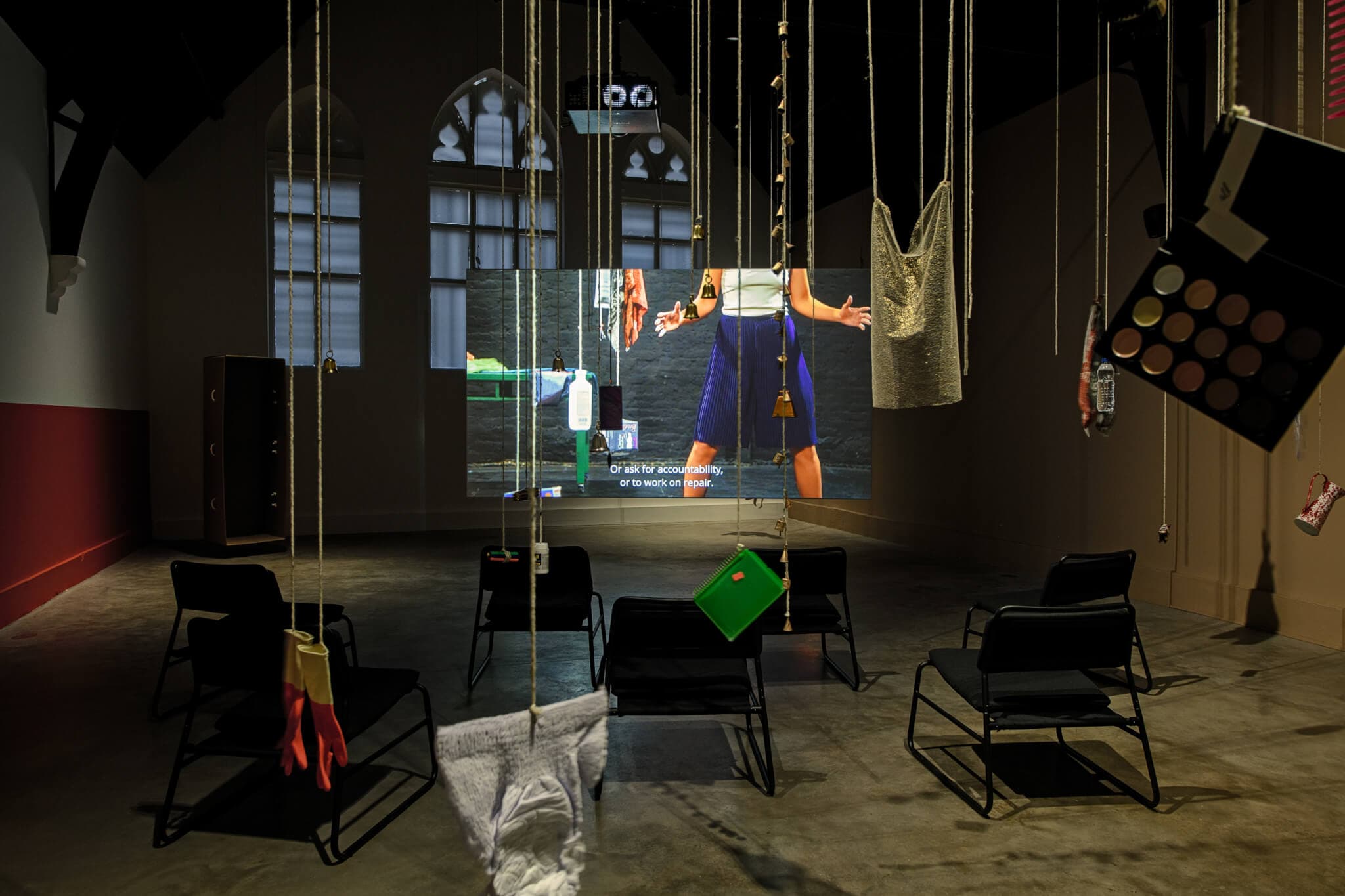
“List Projects 33: Every Ocean Hughes,” organized by Natalie Bell and Zach Ngin at the MIT List Visual Arts Center, showcases One Big Bag (2021), a forty-minute, single-channel video installation that features a monologue performed by actor Lindsay Rico as a death doula, with choreography by Miguel Gutierrez. Hughes, an artist based in both New York and Stockholm and known for her performance-centered inquiries into care, queerness, and bodies, has spent the better part of the past decade building a body of work that examines how we relate to death. One Big Bag is the second of three works by Hughes examining the processes of dying and death.
Across the trilogy, each project presents a different framework through which to confront death: Help the Dead (2019) takes on death’s social implications while River (2023) explores mytho-religious meaning-making. One Big Bag (2021) focuses on the material reality of death. Tonally and literally, the piece offers a practical “how-to” of caring for a dead body—one that sits apart from the profiteering of funeral homes and the death industry at large.
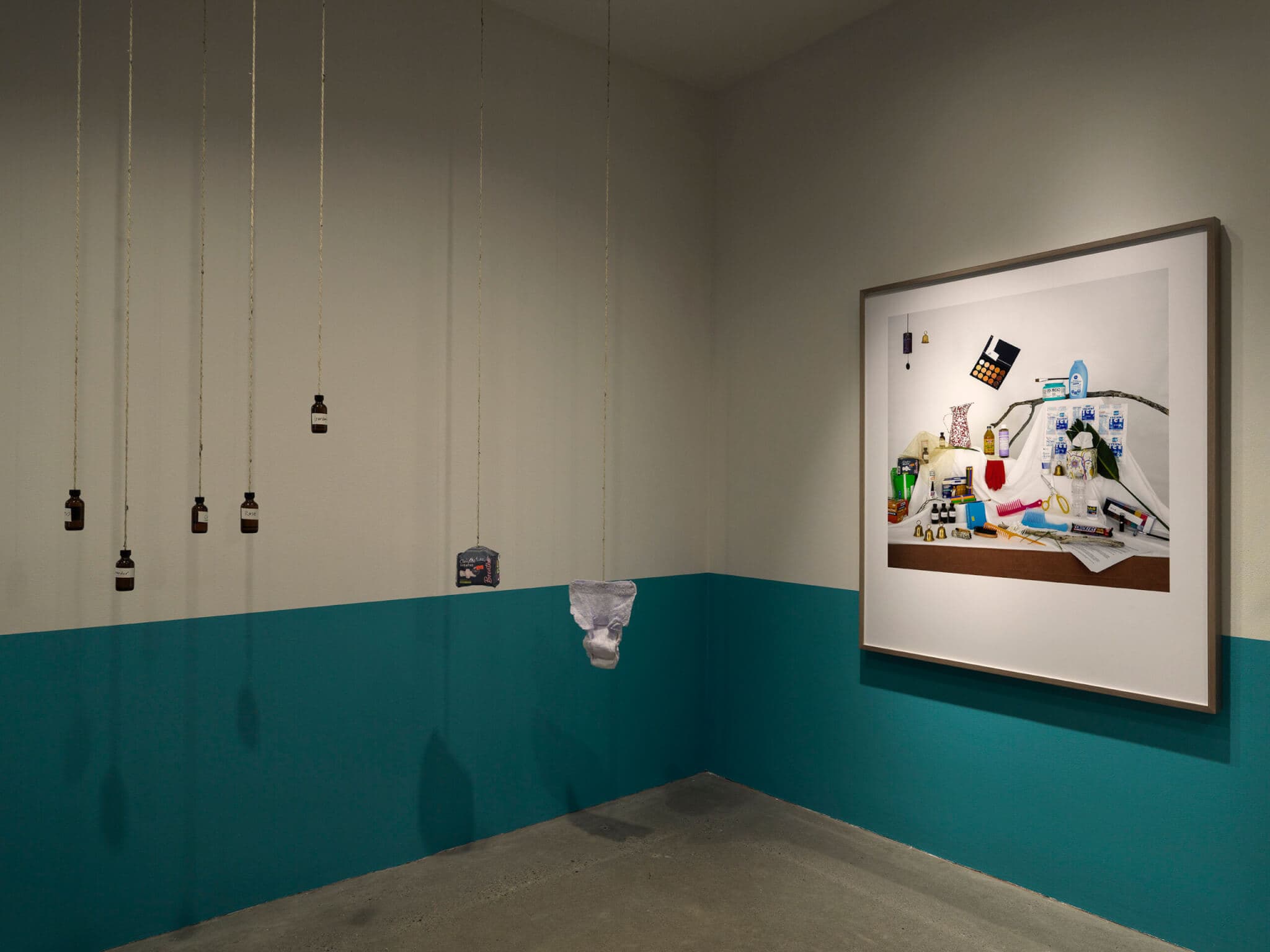
One Big Bag opens with Rico standing in a cardboard coffin, rocking back and forth—one vessel trapped within another. The material reality of bodily death is established immediately. When Rico steps out, literally and symbolically, she moves into the process of care that precedes burial, moving about a room that looks much like the one we sit in as an audience. Each of the doula’s tools hangs from string, at varying heights, around the room—the same height they’d be used when tending to a body. Chairs are arranged among the objects so that the tools surround visitors in the same spatial logic that governs the video.
Opposite the projection hangs a photographic still life of those objects gathered together—a memento mori titled How to not be afraid (2025). Echoing a refrain from the film, the photograph’s title shifts that directive onto another kind of material: the tools themselves. It suggests that action, agency within this inevitable process, and preparation help banish fear. And in many ways, the video functions as a tool of its own, one that offers another reading of the photograph’s title: that in making ceremony from our lives, we create something that endures beyond the corporeal. The ceremonial pulls us out of daily monotony and places us in direct presence with the dead.
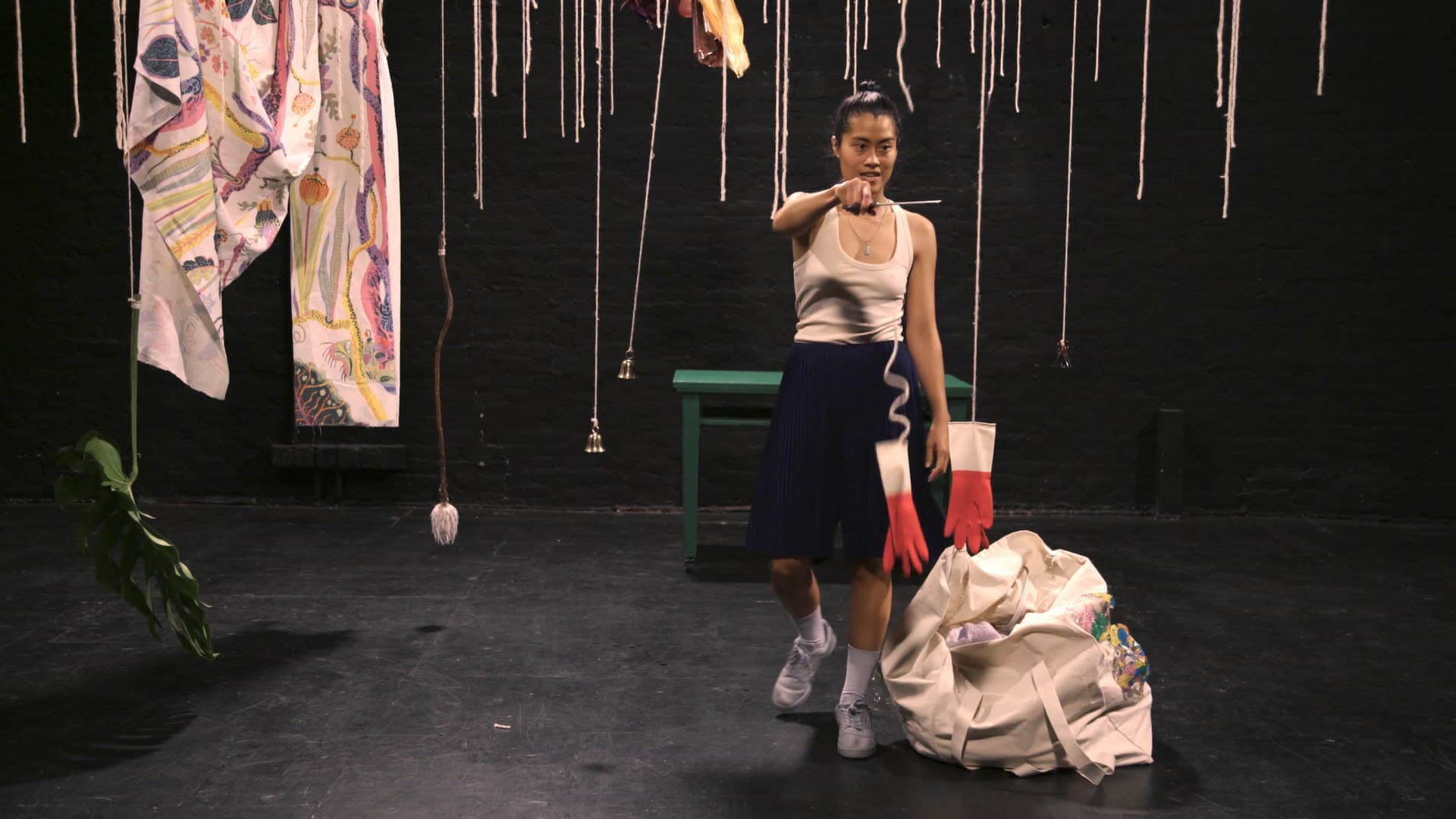
Rico introduces each of the objects in a death doula kit one by one—bowls for holding water while washing the body, scarves for hiding wounds on the neck or head during dressing, snacks for the living caregivers. Rico’s voice is an anchor: rhythmic, instructional, and direct as she cuts each object from its tether and places it in the bag. The sound design foregrounds her monologue, punctuated by the soft clinking of bells, tools, and rustling fabric, a reminder that processing death is physical work.
The piece focuses on the post-mortem period—when life has passed from the body and the body remains to be tended. It asks us to care for our loved ones ourselves, physically prepare their bodies for burial, and makes clear that this is possible. It presents the options we have but often do not know exist.
What struck me first about the piece was the directness of Rico’s delivery. In a culture—particularly within the social norms of the United States—where death is either avoided or discussed in platitudes, frankness feels like a disruption. At first, I took this candor—illustrated in instructions on how to deal with leaky orifices or musings on how the way our body’s pliability changes in the days following death—as a method of subverting what is often framed as taboo by tackling the realities of death without shame or pause.
There’s an edge to Rico’s delivery, intensified by Gutierrez’s choreography—moments that brush up against urgency, even sternness—insisting we think about death’s logistics. Through Rico, Hughes emphasizes the importance of making preparations ahead of time: choosing who we want present and who we want making decisions while the body is prepared for burial. The work asks us to consider both the cultural traditions of our ancestors and our own wishes. As Rico delivers it, Hughes’s directive lands clearly: Open your heart and do the work so that your life can end with the same spirit it was lived.
As someone with little proximity to death and no inherited ritual to call upon, One Big Bag is profoundly instructive. It holds space for cultural specificity (telling us to consider a doula versed in Black hair braiding or the Muslim tradition of burying the dead as close to death as possible, for example) while also opening space for experimental choices in care and burial practices, like a cardboard coffin that aids decomposition. In the exhibition catalogue, Hughes describes the work as queering death, or “doing death differently”—bringing spaciousness and choice into a process typically stripped of both. It queers death in the way bell hooks describes queerness as being at odds with dominant systems—an insistence on building alternative structures where choice and autonomy thrive.1
The vocalized aspect of the video ends in song—Rico’s own voice, unaccompanied—which anchors the cumulative message of the work: how to show love, how to not be afraid, welcome it all, push nothing away. Facing reality means confronting the material truths of our bodies and the choices available to us, and doing so with honesty rather than avoidance. One Big Bag is a clear-eyed offering. It reframes care not as a set of platitudes or gestures toward an afterlife, but as a final act of honoring the human, material part of us—one last time.
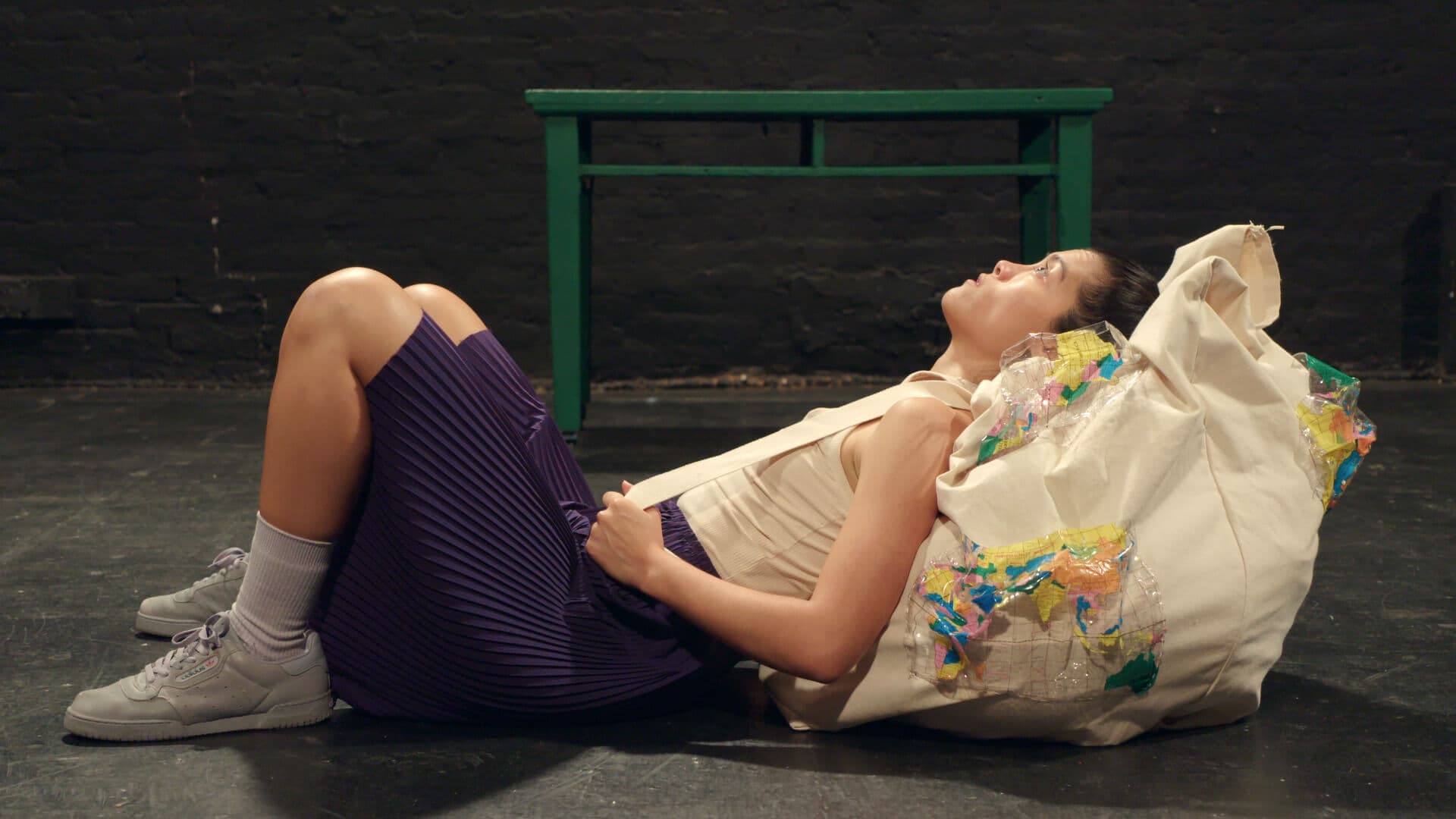
Yet the film does not end in ceremony. Rather, Rico, who is on the floor, straps the doula bag onto her back and attempts to stand. She cannot get up. The bag’s burden is too heavy. This image suggests that while we can create meaning from death—honoring lives, marking transitions, and processing its effects—its weight remains, sometimes unbearably so. We see her struggle to stand, and then it ends. What comes next is unknown, and sometimes we must face that reality.
—1 bell hooks, Art on My Mind, (The New Press, 1995), 59.
“List Projects 33: Every Ocean Hughes” is on view through December 14, 2025, at the MIT List Visual Arts Center, 20 Ames Street, Cambridge.